Las Posadas runs for nine nights, from Wednesday, December 16 through Thursday, December 24, 2026. It is one of the warmest traditions of the Mexican Christmas season: candlelit processions, songs at the door, a piñata, hot punch and a feast shared with neighbors. This guide explains what Las Posadas means, how it works, what to cook and say, and gives you more than 100 original wishes in English and Spanish for every night.
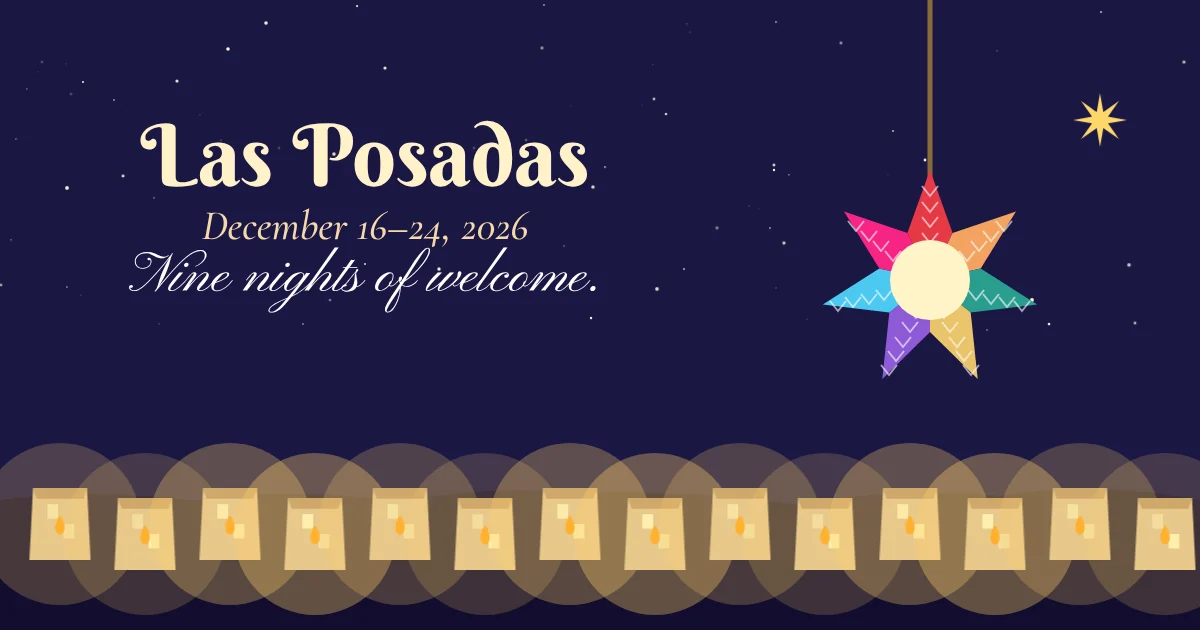
Las Posadas 2026 at a Glance
| Detail | What to know |
|---|---|
| Dates in 2026 | Wednesday, December 16 to Thursday, December 24 |
| Meaning of “posada” | Inn or lodging in Spanish |
| Commemorates | Mary and Joseph’s journey to Bethlehem and their search for shelter |
| Nine nights | Often said to reflect the nine months of Mary’s pregnancy |
| Signature traditions | Procession, songs, piñata, ponche, tamales, buñuelos |
| Ends on | Nochebuena (Christmas Eve), December 24 |
What Is Las Posadas?
Las Posadas is a nine-night celebration from December 16 to 24 that reenacts Mary and Joseph’s search for shelter on their way to Bethlehem. The word posada means “inn” or “lodging,” and the nine nights are commonly said to symbolize the nine months of Mary’s pregnancy, building toward Christmas Eve, known in Mexico as Nochebuena.
It is celebrated across Mexico and in many Latin American countries, and it is a beloved part of Mexican American life in the United States. Some Posadas are held in churches, plazas and community centers, and in neighborhoods the party often moves from house to house across the nine nights.
Where Las Posadas Comes From
According to Mexico News Daily, the origin of the Posadas dates to 1587, when Pope Sixtus V gave permission for nine special Masses to be held between December 16 and December 24. EWTN News reports that Augustinian missionaries near Teotihuacán noticed existing nightly celebrations of pre-Hispanic origin and gave them a new meaning: accompanying Mary and Joseph on their pilgrimage. Over time the Masses grew into the community processions and parties people know today.
Some sources also describe each of the nine nights as reflecting a Christian virtue, such as humility, charity or generosity. Traditions vary by community, so your family may do things differently, and that is part of the charm.
How a Posada Works
- Prayer or rosary. As a religious event, a Posada often begins in church with the Holy Rosary, according to Mexico News Daily.
- Procession. Guests walk together, often with candles or lanterns, carrying figures of Mary and Joseph. Most begin around dusk.
- The song at the door. Two groups sing a traditional exchange. The “pilgrims” ask for lodging, and the “innkeepers” at first refuse. Eventually the door opens and everyone is welcomed in.
- Mass or a short prayer. Some communities hold a short service at this point.
- The piñata. Children, usually blindfolded, take turns swinging at a piñata filled with candy and fruit.
- The feast. The night ends with food, drink and conversation.
Many Posadas are informal. Route and start times can be spontaneous, and what matters most is welcome and company.
The Piñata and What It Means
EWTN News notes that Spanish missionaries adapted an older Aztec tradition of a clay pot filled with treasures to create the piñata used in Posadas. Merca20 explains that the candy inside is often said to represent the riches of the heavenly kingdom, which is why breaking the piñata is a joyful moment of sharing. Modern piñatas are usually made of papier-mâché and tissue paper, often in a star shape.
If you are hosting, give each child a turn, and make sure every child goes home with a share of the sweets.
What to Eat and Drink at a Posada
- Ponche navideño. A warm fruit punch with cinnamon and tejocotes, rooted in indigenous culture, according to AOL’s roundup of Posada traditions.
- Tamales. The Phoenix New Times describes the tamal as a constant presence at Posadas and closely tied to the image of a Mexican Christmas.
- Atole and champurrado. Warm, thick drinks made with corn flour, often flavored with piloncillo, cinnamon, milk or chocolate.
- Buñuelos. Crisp fried pastries dusted with cinnamon sugar, a simple and satisfying finish.
- Bolsitas. Small bags of candy, peanuts and fruit given to guests, in many families.
What to Say at a Posada
The most common greeting is ¡Feliz Posada! or Felices fiestas. If you are invited to a Posada, a warm “Thank you for having us” and a small contribution (a dish, drink or bag of candy) is always welcome. In English, “Wishing you a joyful Posada” works well. The wishes below are original, and you can use them for a card, a group chat or a toast.
Short Las Posadas Wishes in English
- Wishing you a joyful Posada.
- Open the door. Open your heart.
- May every night of Las Posadas bring you closer to the people you love.
- Warm hearts, warm punch, warm welcome.
- Happy Posadas to you and your family.
- May your home be full of light, music and laughter.
- Nine nights, one journey. Enjoy every step.
- Break the piñata, share the joy.
- Thank you for opening your door to us.
- May the season fill your table and your heart.
- Sending you light for the nine nights ahead.
- Good food, good company, good memories.
- May all who knock find a warm welcome.
- Wishing you peace, love and a very sweet piñata.
- Happy Las Posadas. May the lights guide you home.
Wishes in Spanish (Deseos en Español)
- ¡Feliz Posada!
- Que tengas unas Posadas llenas de luz y alegría.
- Abre la puerta y abre tu corazón.
- Que la unión familiar llene tu casa en estas fiestas.
- Felices fiestas a ti y a toda tu familia.
- Que no falten el ponche, los tamales ni las risas.
- Gracias por recibirnos con tanto cariño.
- Que cada noche de la posada te llene de paz.
- Te deseo nueve noches de alegría y una Nochebuena muy feliz.
- Que la luz de las velas ilumine tu camino.
- Que se rompa la piñata y se reparta la dulzura.
- Con todo mi cariño en esta temporada.
- Que la fe y la esperanza nunca te falten.
- Que el espíritu de la posada viva en tu hogar todo el año.
- Un abrazo fuerte y mis mejores deseos.
Night-by-Night Wishes (December 16 to 24)
Some families give each night a small theme. These messages are original and are a nice way to send a daily greeting during the novena.
- Dec. 16, welcome. The journey begins. May you be met with open doors.
- Dec. 17, humility. May we listen more and speak with kindness.
- Dec. 18, patience. May we be patient with ourselves and with each other.
- Dec. 19, generosity. Share what you have. A little goes a long way.
- Dec. 20, trust. May you trust the road you are on.
- Dec. 21, gratitude. Name three things you are thankful for tonight.
- Dec. 22, forgiveness. May old hurts soften and new friendships grow.
- Dec. 23, joy. Laugh loudly tonight. The piñata can wait for no one.
- Dec. 24, Nochebuena. The door is open. Welcome home.
These themes are a suggestion, not a fixed tradition, and customs differ by family and region.
Heartfelt Messages for Family and Friends
- Thank you for always keeping your door open. It is the best Christmas gift you give.
- May the Posadas this year be full of songs, stories and second helpings.
- I am so grateful to be sharing these nine nights with you.
- Wishing you a season of welcome, warm food and old friends.
- For everyone who is far from home this year: you are in our thoughts, and there is a seat for you at the table.
- May the glow of the farolitos remind you that you are never alone.
- Thank you for keeping the traditions alive for the little ones.
- Wishing you a house full of people and a kitchen full of steam.
- May every knock this season be answered with a smile.
- To my neighbors: thank you for making this street feel like family.
Messages for Hosts and Neighbors
- Thank you for hosting. Your home felt like the warmest place in town.
- The tamales were unforgettable. Thank you for the invitation.
- Thank you for including us. We felt so welcome.
- May your generosity come back to you tenfold this season.
- We would love to host a night next year. Thank you for the inspiration.
- You make the neighborhood feel like one big family.
Captions and Social Media Posts
- Night one of Las Posadas. Candles lit, heart open.
- Nine nights of light. #LasPosadas
- Open the door. Open your heart.
- Ponche, tamales and a very full house.
- Break the piñata. Share the joy.
- Farolitos glowing and carols in the air.
- Feliz Posada from our family to yours.
- Nine nights, one journey.
- Good food. Good company. Good memories.
- Making space at the table, as always.
- Light the way for each other.
- Nochebuena is almost here.
How to Host a Posada at Home
- Pick your night. Choose one or more of the nine nights and invite neighbors, family and friends.
- Set the welcome. Line the walkway with farolitos (paper bags with sand and a candle) or battery lights.
- Print the song. Make a simple sheet with the traditional Posada song so everyone can join in.
- Prepare the food. A big pot of ponche, tamales, atole and buñuelos covers most needs.
- Fill a piñata. Choose candy, fruit and peanuts, and supervise the swinging.
- Make bolsitas. Small gift bags for each guest are a lovely touch.
- Keep it safe. Use real candles carefully, and keep them away from children and decorations.
Las Posadas in the United States
Many U.S. communities hold public Posadas. NBC Los Angeles reports that the Posada at Olvera Street runs for nine nights, from December 16 to 24, with a candlelit procession and a children’s piñata launching each evening. Parishes, schools and cultural centers across the country host their own versions. Check your local parish bulletin or city events calendar for details, since times and locations change every year.
If you are celebrating the Feast of Our Lady of Guadalupe on December 12 as well, see our Our Lady of Guadalupe wishes and messages. For Christmas Eve and Christmas Day greetings, see our Christmas wishes.
Frequently Asked Questions
When is Las Posadas in 2026?
Las Posadas begins on Wednesday, December 16, 2026, and ends on Thursday, December 24, 2026.
What does “posada” mean?
It means “inn” or “lodging” in Spanish. The tradition recalls Mary and Joseph looking for a place to stay in Bethlehem.
Why are there nine nights?
The nine nights are commonly said to symbolize the nine months of Mary’s pregnancy. Historically, a series of nine special Masses was also approved for December 16 to 24.
What do you say at a Posada?
“¡Feliz Posada!” or “Felices fiestas.” In English, “Happy Posadas” or “Wishing you a joyful Posada” is perfect.
What food is served at a Posada?
Ponche navideño, tamales, atole, champurrado and buñuelos are classic choices.
Do you have to be Catholic to attend a Posada?
No. Many community Posadas welcome everyone. If you are a guest, simply join in respectfully, sing along if you like and enjoy the hospitality.
Final Thoughts
Las Posadas is really about welcome: a door that opens, a table with room for one more and a song that everyone knows. Whether you are hosting, joining a neighbor’s celebration or sending a message to someone far away, a sincere “Feliz Posada” goes a long way. Choose a wish above, make it personal and send some light.