Somewhere right now, a grandmother in Seville is typing “Feliz Navidad” under a photo of the family table, a student in Manila is sending “Maligayang Pasko” to her cousins, and a neighbor in Stockholm is tucking a card that says “God Jul” into a mailbox. The words are different, but the feeling behind them is the same. Learning a few of those greetings is one of the easiest ways to make a card, a message or a video call feel personal, especially if your family, friends or coworkers come from more than one country.
This guide collects more than sixty ways to say Merry Christmas, grouped by region, with simple pronunciation help and a few notes on the traditions that go with each greeting. After the list you will find short multilingual card lines, longer English wishes inspired by Christmas customs around the world, and practical tips for writing a message in a language you do not speak. Where a language is normally written in a non-Latin script, we show the common romanized form so you can read it aloud and copy it into a message with confidence.
On this page: Western Europe · Nordic and Baltic · Central and Eastern Europe · Asia, Africa and the Americas · Card lines · Wishes to send · Traditions · Writing tips · Captions

Merry Christmas in Western Europe
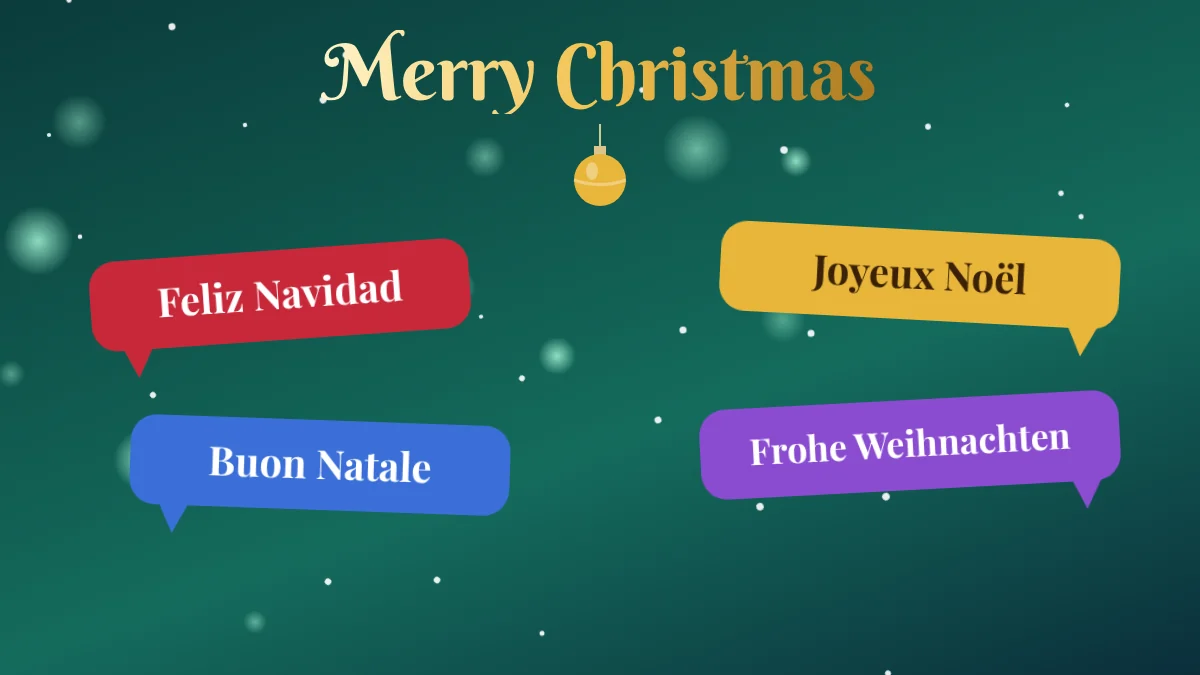
Western Europe gives English speakers the friendliest start, because many of these greetings share Latin roots and look familiar on the page. “Natale” and “Navidad” both trace back to the Latin word for birth, while the Germanic languages tend to build their greetings from words meaning “holy nights” or “Christ’s mass.” Notice how often the greeting is plural. “Frohe Weihnachten” literally means “happy Christmases,” a small reminder that for many families the celebration stretches across several days.
| Language | Greeting | How to say it |
|---|---|---|
| Spanish | Feliz Navidad | feh-LEEZ nah-bee-DAHD |
| French | Joyeux Noël | zhwah-YUH no-EL |
| German | Frohe Weihnachten | FROH-eh VY-nakh-ten |
| Italian | Buon Natale | bwon nah-TAH-leh |
| Portuguese | Feliz Natal | feh-LEEZ nah-TAHL |
| Dutch | Vrolijk Kerstfeest | VROH-lik KERST-fayst |
| Flemish (Belgium) | Zalig Kerstfeest | ZAH-lukh KERST-fayst |
| Catalan | Bon Nadal | bon nah-DAHL |
| Basque | Eguberri on | eh-goo-BEH-ree on |
| Irish | Nollaig Shona Duit | NULL-ig HUN-ah gwit |
| Scottish Gaelic | Nollaig Chridheil | NOL-ik KREE-al |
| Welsh | Nadolig Llawen | nah-DOH-lig HLOW-en |
| Maltese | Il-Milied it-Tajjeb | il-MEE-leed it-TAH-yeb |
| Luxembourgish | Schéi Chrëschtdeeg | shay KRUHSHT-dayk |
Notes on the Western European greetings
In Spain and Latin America, “Feliz Navidad” is often paired with “y próspero Año Nuevo,” which wishes the recipient a prosperous new year in the same breath. The French “Joyeux Noël” can be followed by “et bonne année,” and many French cards say “Joyeuses fêtes” when they want to cover the whole holiday season. In Germany, Christmas is celebrated mainly on the evening of December 24, so you will often hear “Frohe Weihnachten” shortened to “Schöne Weihnachten” or sent along with “einen guten Rutsch,” a wish for a good slide into the new year.
Italian families usually add “Auguri” (best wishes) to Buon Natale, and in Portugal the greeting often becomes “Boas Festas,” meaning good holidays. Catalan households have a playful custom around the Tió de Nadal, a smiling log that children “feed” in December and then beat gently with sticks on Christmas Eve until it “delivers” small gifts. If you want to charm a Catalan friend, a “Bon Nadal” with a log emoji will do the job.
The Celtic languages are a lovely choice for a more unusual card. Irish “Nollaig Shona Duit” is addressed to one person; to a group you would say “Nollaig Shona Daoibh.” In Wales, Christmas is also linked with the Mari Lwyd, a horse-skull figure carried from door to door in midwinter, while Scottish families often save their biggest celebration for Hogmanay, which is why Scottish Gaelic cards sometimes pair Nollaig Chridheil with a New Year wish.
Merry Christmas in the Nordic and Baltic Countries
The Nordic languages are close cousins, and the word “jul” (or “jól”) is much older than the Christian holiday itself. It comes from the winter feast that Scandinavians celebrated long before Christianity arrived, which is why you still hear Yule echoed in English. Swedish, Norwegian and Danish greetings look almost identical, with small spelling differences that matter if you want your card to look polished.
| Language | Greeting | How to say it |
|---|---|---|
| Swedish | God Jul | good YOOL |
| Norwegian | God Jul | goo YOOL |
| Danish | Glædelig Jul | GLEH-deh-lee YOOL |
| Finnish | Hyvää joulua | HUU-vah YOH-loo-ah |
| Icelandic | Gleðileg jól | GLETH-ih-lek YOHL |
| Faroese | Gleðilig jól | GLEH-ih-lih YOHL |
| Estonian | Rõõmsaid jõule | ROOM-sighd YUH-leh |
| Latvian | Priecīgus Ziemassvētkus | PREE-tsee-goos ZEE-mahs-vet-koos |
| Lithuanian | Linksmų Kalėdų | LINKS-moo kah-LAY-doo |
What to know before you send a Nordic greeting
Iceland has one of the most charming Christmas customs on the list. Instead of one Santa Claus, there are thirteen Yule Lads who visit children on the thirteen nights before Christmas, leaving small gifts in shoes set on the windowsill. Many Icelandic families also exchange books on Christmas Eve and spend the evening reading, a tradition known as the Jólabókaflóð, or “Christmas book flood.” A message that says “Gleðileg jól” with a stack of books beside it will land beautifully.
In Sweden, December 13 brings St. Lucia Day, when children in white gowns carry candles through the dark and sing. Finland adds a sauna to the Christmas Eve schedule, and many Finnish families visit cemeteries to light candles for those they miss. A greeting in these countries often carries a quiet, candle-lit mood, so warm, gentle wishes work better than loud ones. If you are writing to a Finnish friend, remember the double vowels: “Hyvää joulua” needs both dots over the “a.”
The Baltic states add their own layers. Lithuanian families gather for Kūčios, a twelve-dish meatless supper on Christmas Eve, and an empty seat is sometimes left at the table for relatives who have passed away. In Estonia, tradition holds that you should eat seven, nine or twelve times on Christmas Day, because an odd number of meals brings strength for the year ahead.
Merry Christmas in Central and Eastern Europe
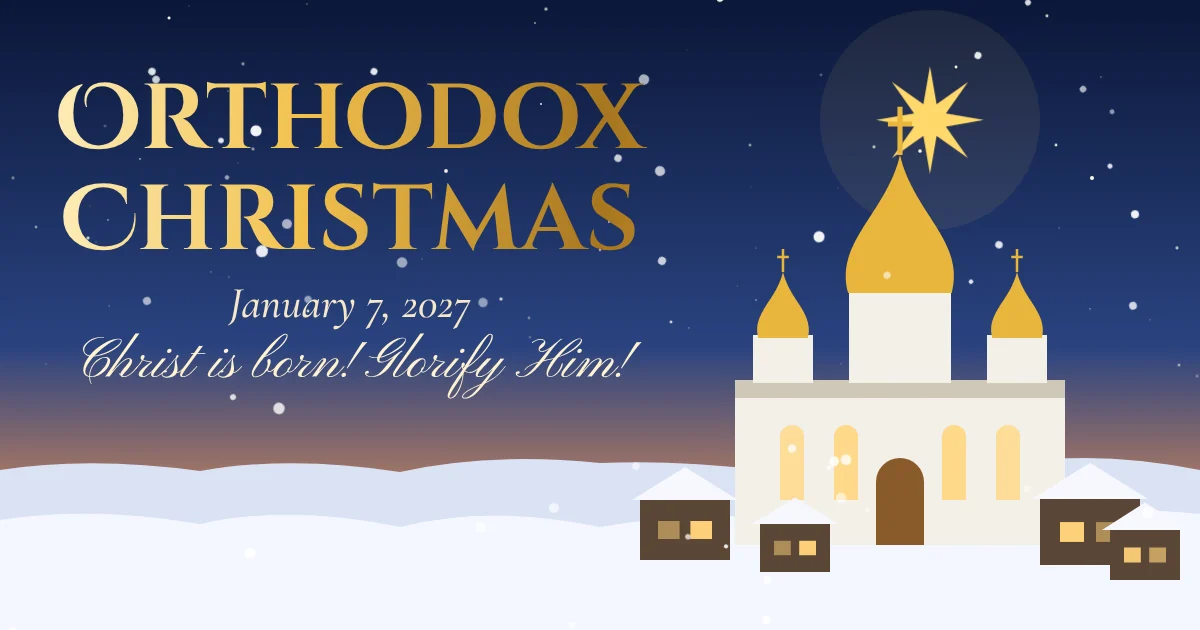
Central and Eastern Europe is where Christmas calendars diverge. Most Catholic and Protestant countries celebrate on December 25, while many Orthodox churches follow the Julian calendar and celebrate on January 7. Both dates appear below, so check which one your recipient observes before you send. If you want help with the January date, our guide to Orthodox Christmas wishes and greetings covers it in detail.
| Language | Greeting | How to say it |
|---|---|---|
| Polish | Wesołych Świąt | veh-SOH-wikh SHVYONT |
| Czech | Veselé Vánoce | VEH-seh-leh VAH-no-tseh |
| Slovak | Veselé Vianoce | VEH-seh-leh VEE-ah-no-tseh |
| Hungarian | Boldog karácsonyt | BOL-dog KAH-rah-chon-yt |
| Romanian | Crăciun fericit | kruh-CHOON feh-ree-CHEET |
| Bulgarian | Vesela Koleda | VEH-seh-lah KO-leh-dah |
| Croatian | Sretan Božić | SRE-tahn BO-zheech |
| Serbian (Latin) | Srećan Božić | SREH-chahn BO-zheech |
| Slovenian | Vesel božič | VEH-sel BO-zheech |
| Albanian | Gëzuar Krishtlindjet | geh-ZOO-ar krish-tlin-JET |
| Greek | Kala Christougenna | kah-LAH hris-too-YEH-nah |
| Russian | S Rozhdestvom Khristovym | s rahzh-DYEST-vom hris-TOH-vim |
| Ukrainian | Z Rizdvom Khrystovym | z RIZD-vom hris-TOH-vim |
Traditions behind the Eastern European greetings
Polish Christmas Eve, known as Wigilia, begins when the first star appears in the evening sky. Families share an opłatek wafer, exchanging a wish with each person before sitting down to a twelve-dish meatless supper. Setting an extra place at the table for an unexpected guest is a gentle way of saying everyone is welcome. A message that mentions the first star and the shared wafer will feel authentic to a Polish friend.
In Czechia and Slovakia, Christmas Eve is the main event, and the Czech custom of slicing an apple crosswise to see whether the seeds form a star (good luck) or a cross (a challenging year) is still popular. In Hungary, children traditionally receive gifts from the baby Jesus rather than Santa Claus. Romanian carolers go door to door, and the pork-based feast that follows has deep roots in the old winter slaughter tradition. In Greece, the carols are called kalanda, and children sing them with small metal triangles.
In Ukraine, many families celebrate on January 7, though in recent years more people have chosen December 25 as the main date. The Holy Supper has twelve meatless dishes, begins when the first star appears, and always includes kutia, a wheat berry pudding with honey and poppy seeds. If you are writing to someone in Ukraine or the Ukrainian diaspora, a short, sincere wish for peace and togetherness is always welcome, and you can match the date they follow rather than assuming December 25.

Merry Christmas in Asia, Africa, the Pacific and the Americas
Outside Europe, Christmas is celebrated in widely different ways. The Philippines has some of the longest Christmas seasons on the planet, with carols starting in September. In Japan, Christmas is mostly a festive, commercial occasion, famous for Christmas cake and, thanks to a decades-old marketing campaign, fried chicken. In Bangladesh, December 25 is a public holiday known as Boro Din, or “the Big Day,” and Christian communities in Dhaka, Barisal and Gazipur gather for church services, carols and shared meals. The greetings below use romanized spellings so you can say them aloud easily.
| Language | Greeting | How to say it |
|---|---|---|
| Filipino / Tagalog | Maligayang Pasko | mah-lee-GAH-yang PAHS-ko |
| Indonesian | Selamat Natal | seh-LAH-mat nah-TAHL |
| Malay | Selamat Hari Natal | seh-LAH-mat HAH-ree nah-TAHL |
| Vietnamese | Giáng Sinh vui vẻ | zhahng sihn voo-ee veh |
| Thai | Suk San Wan Christmas | sook sahn wahn KRIS-mas |
| Mandarin Chinese | Shèngdàn Kuàilè | shung-dahn kwai-luh |
| Japanese | Merii Kurisumasu | meh-ree koo-ree-soo-mah-soo |
| Korean | Meri Keuriseumaseu | meh-ree keu-ree-seu-mah-seu |
| Hindi | Krismas ki Shubhkamnaen | KRIS-mas kee shoob-kahm-NAH-ayn |
| Bengali | Shubho Boro Din | SHOO-bho BO-ro deen |
| Arabic | Eid Milad Majid | eed mee-LAHD mah-JEED |
| Swahili | Krismasi Njema | kris-MAH-see N-jeh-mah |
| Afrikaans | Geseënde Kersfees | kheh-SEH-en-deh KERS-fays |
| Hawaiian | Mele Kalikimaka | MEH-leh kah-lee-kee-MAH-kah |
| Esperanto | Gajan Kristnaskon | GAH-yahn krist-NAHS-kon |
A few cultural notes
The Hawaiian greeting “Mele Kalikimaka” is not a native word but a phonetic adaptation of “Merry Christmas,” because the Hawaiian alphabet has no “r” or “s.” That makes it one of the most recognizable greetings in the world, and a bright, summery card with palm trees suits it well. In Southern Hemisphere countries such as Australia, New Zealand and South Africa, December falls in summer, so Christmas often means beach days, barbecues and cricket rather than snow.
In the Philippines, the nine-day dawn Masses called Simbang Gabi lead up to Christmas Eve, and families gather after midnight for the Noche Buena feast. Star-shaped paper lanterns called parols hang in windows and streets. In Latin America, the celebration is often at its peak on Christmas Eve, with the Spanish phrase “Nochebuena” as important as “Navidad.” In Mexico, the nine nights of Las Posadas bring neighborhoods together with songs, piñatas and shared food, which is why a Mexican friend may greet you with “Felices fiestas” long before December 24.
Across the Arab world, Christmas greetings are shared by Christian communities in Lebanon, Egypt, Syria, Jordan and Palestine. “Eid Milad Majid” translates roughly as “glorious feast of the birth,” and it is often paired with “wa kol sana wa antum tayyibeen,” a general wish for good health throughout the year. In Ethiopia, Christmas is called Genna and is celebrated on January 7 with a traditional game and church services in white cotton shawls, which is another reminder to verify dates before sending.
Short Christmas Card Lines in Other Languages
A greeting alone is a good start, but a short line makes the card feel written for the person. Each of these is simple enough to copy into a card or text, and each comes with an English translation so you know exactly what you are sending. Keep the original language prominent and the English small, or send both together for bilingual families.
- Spanish: “Que la paz y la alegría de la Navidad llenen tu hogar.” (May the peace and joy of Christmas fill your home.)
- Spanish: “Feliz Navidad y próspero Año Nuevo, con todo mi cariño.” (Merry Christmas and a prosperous New Year, with all my love.)
- French: “Joyeux Noël à toi et à tous ceux que tu aimes.” (Merry Christmas to you and everyone you love.)
- French: “Que cette fête apporte lumière et douceur dans ta maison.” (May this holiday bring light and gentleness to your home.)
- German: “Frohe Weihnachten und einen guten Rutsch ins neue Jahr!” (Merry Christmas and a good start to the new year!)
- German: “Ich wünsche dir eine besinnliche Weihnachtszeit.” (I wish you a reflective, peaceful Christmas season.)
- Italian: “Buon Natale! Che sia un giorno pieno di amore e di risate.” (Merry Christmas! May it be a day full of love and laughter.)
- Italian: “Tanti auguri di buone feste a te e alla tua famiglia.” (Warmest wishes for happy holidays to you and your family.)
- Portuguese: “Feliz Natal! Que o novo ano traga saúde e muita paz.” (Merry Christmas! May the new year bring health and plenty of peace.)
- Dutch: “Fijne feestdagen en een gezond en gelukkig nieuwjaar.” (Happy holidays and a healthy, happy new year.)
- Swedish: “God Jul och ett gott nytt år!” (Merry Christmas and a good new year!)
- Danish: “Glædelig jul og godt nytår til dig og dine.” (Merry Christmas and a good new year to you and yours.)
- Finnish: “Hyvää joulua ja onnellista uutta vuotta!” (Merry Christmas and a happy new year!)
- Polish: “Zdrowych, pogodnych Świąt Bożego Narodzenia.” (Healthy, serene Christmas holidays.)
- Irish: “Nollaig Shona agus athbhliain faoi mhaise duit.” (Happy Christmas and a prosperous new year to you.)
- Tagalog: “Maligayang Pasko at Manigong Bagong Taon!” (Merry Christmas and a prosperous New Year!)
- Indonesian: “Selamat Natal, semoga damai dan sukacita menyertai Anda.” (Merry Christmas, may peace and joy be with you.)
- Swahili: “Krismasi njema na heri ya mwaka mpya.” (Merry Christmas and happy new year.)
If you are unsure about a line, stick with the plain greeting. A correct “Feliz Navidad” is always better than an ambitious sentence with grammar mistakes. Native speakers generally appreciate the effort, but a clean, short message shows more respect than a long one that has gone through an automatic translator without checking.
Christmas Wishes Inspired by Traditions Around the World
Here are twenty original English wishes, each inspired by a custom in a different country. They work as card messages, WhatsApp texts or captions, and each one pairs naturally with the greeting from that region.
- Like the first star over a Polish Christmas Eve, may a small light show you where to go this year. Wesołych Świąt!
- May your table be as full as a Lithuanian Kūčios supper, with one seat always open for someone who needs a welcome.
- Wishing you a Christmas as calm as an Icelandic evening with a good book and a warm blanket. Gleðileg jól!
- May the Yule Lads of your own life leave something small and wonderful in your shoe every day this season.
- Like a Filipino parol in the window, may your home shine bright enough that everyone on the street feels welcome. Maligayang Pasko!
- May your Christmas Eve feel as joyful as a Spanish Nochebuena, with good food, loud laughter and relatives who stay too long.
- May your holiday be as peaceful as a Swedish morning with candles lit before sunrise. God Jul!
- Sending you the warmth of an Italian family lunch that somehow lasts until dinner. Buon Natale!
- Wishing you a French réveillon where the cheese is perfect, the stories are long and nobody checks the time. Joyeux Noël!
- May the kindness you give this December come back to you like a Hawaiian wave, warm and unhurried. Mele Kalikimaka!
- May your home hold the spirit of Las Posadas this year: open doors, shared songs and a place for every traveler.
- Like kutia on a Ukrainian Holy Supper table, may your holidays be sweet, simple and shared with the people who matter most.
- Wishing you a German Christmas market evening: cold hands, warm mugs and good company all around. Frohe Weihnachten!
- May your Christmas be as bright as a Japanese winter illumination and as gentle as freshly fallen snow.
- May you find in the new year what Czech families look for in a sliced apple: a star of good luck at the very center.
- Whether you celebrate in sun or snow, may peace sit down at your table and stay long past dessert. Krismasi njema!
- From my home to yours, wherever it is on the map, merry Christmas. May distance never feel as long as it looks.
- May the nine nights before Christmas fill your heart as fully as a Filipino Noche Buena fills the table.
- To the friends who speak a different language but always understand me: Merry Christmas, in every language we know.
- Peace, health and good company, three gifts that never go out of style and always fit. Merry Christmas from my family to yours.
For more English-language options, our main guide to Merry Christmas wishes and messages with cool images has hundreds of ready-to-send lines, and Christmas wishes for friends and Christmas wishes for family go deeper on those audiences.
Christmas Traditions That Explain the Greetings
A greeting makes more sense once you know what people actually do. Here are several customs that are easy to mention in a message to show you took the time to learn them.
Spain and Latin America: Nochebuena and the three kings
The biggest family dinner takes place on December 24, called Nochebuena, often after midnight Mass (the “Misa del Gallo”). In Spain, gifts traditionally arrive on January 6, when the Three Kings parade through the streets. If you are writing to a Spanish family, a message that wishes them a happy Epiphany as well will stand out. Our guide to Epiphany and Three Kings Day wishes can help.
Germany and Austria: Advent and the Christkind
The German Advent wreath, the calendar with doors, and the Christmas markets all lead to December 24, when many children believe the Christkind brings the presents. Candlelit trees are traditional, and many families sing “Stille Nacht,” which was first performed in Austria in 1818. If you are writing in the weeks before Christmas, a blessing for Advent will fit better than a Christmas Day greeting, and Advent wishes and blessings offers plenty of options.
Italy: the presepe and La Befana
Italian homes often display a nativity scene called a presepe, sometimes elaborate enough to fill a whole room. Children wait not only for Babbo Natale but also for La Befana on January 5, a kindly witch who delivers sweets to good children. The Italian feast of the Seven Fishes is mainly an Italian-American custom, while in Italy itself the Christmas Eve menu varies from region to region.
Scandinavia: candles, porridge and light in the dark
Because the winter days are so short, light plays a central role. Candles line the windows, and in Denmark and Norway a bowl of rice porridge with a hidden almond decides who wins a marzipan pig. Finnish and Swedish families also treat the days between Christmas and New Year as a quiet time to rest.
Philippines: the longest Christmas
Filipino Christmas begins as early as September, when radio stations start playing carols, and extends until the feast of the Santo Niño in January. The parol lantern, Simbang Gabi Masses and the Noche Buena feast are the key elements. A cheerful “Maligayang Pasko” in a text message, perhaps along with a parol emoji, is a very personal way to greet a Filipino friend.
Bangladesh: Boro Din
Bangladesh does not have a majority-Christian population, but December 25 is an official holiday called Boro Din, and the celebration is shared by neighbors of many faiths. Churches in Dhaka and other cities hold midnight services, hotels and parks decorate with lights, and Christian families prepare traditional pithas and festive meals. A short “Shubho Boro Din” is a warm way to greet Bangladeshi Christian friends and colleagues.
Australia and the Southern Hemisphere: summer Christmas
In Australia, Christmas dinner may be a seafood barbecue on the beach. Carols by Candlelight events draw crowds to parks across the country. If your recipient is in a warm place, avoid sending snowy imagery that doesn’t fit their reality; a sunny card with fireworks or a beach scene is more thoughtful.
How to Write a Christmas Message in a Language You Don’t Speak
You do not need fluency to send a lovely multilingual message. These practical steps keep the result accurate and respectful.
- Use the standard greeting first. A correctly spelled “Joyeux Noël” is more meaningful than a long sentence from a translation tool.
- Check the accents and special letters. Missing marks can change the meaning or look careless, so copy the greeting with the diacritics intact: “Glædelig,” “Gleðileg,” “Crăciun,” “Božić.”
- Confirm the date. Orthodox families may celebrate on January 7, and some communities mark both dates.
- Ask a native speaker when stakes are high. For business cards and clients, a quick check from a colleague or friend avoids awkward mistakes.
- Match the register. Some languages use formal and informal “you.” Choose the formal version for clients and older relatives unless you know better.
- Add one personal sentence in English. A single sentence about something you shared that year turns a greeting into a real message.
- Keep the visual simple. Pick a card with a large greeting and little extra text, so the language stays the focus.
When writing to colleagues around the world, the safest option is a short, inclusive greeting. Our guide to Christmas wishes for your boss, coworkers and clients includes professional wording, and happy holidays messages covers situations where you aren’t sure which holiday the recipient observes.
Common mistakes to avoid
- Assuming that one language means one culture. Spanish in Madrid, Mexico City and Buenos Aires carries different customs.
- Using machine translation for long, poetic text without checking it.
- Forgetting that Christmas is not universal. If you are not sure, “Happy holidays” is the safe alternative.
- Sending a December 25 greeting to someone who celebrates on January 7, or sending it too early in their Advent or Lent calendar.
Christmas Captions Using Foreign Greetings
Social posts are a good place to try a greeting from another language. These short captions fit photos of family tables, decorated trees, holiday trips and cozy nights in.
- Feliz Navidad from our table to yours.
- Joyeux Noël, with extra candles and extra cheese.
- God Jul from a very snowy window.
- Buon Natale, may the pasta never run out.
- Frohe Weihnachten and a cup of something hot.
- Maligayang Pasko, lanterns on and hearts full.
- Mele Kalikimaka, barefoot edition.
- Nollaig Shona, wherever home is this year.
- Gleðileg jól, books and blankets only.
- Merry Christmas in every language we know.
- Selamat Natal to everyone near and far.
- Shubho Boro Din, with love and lights.
For more caption ideas, see Christmas captions for Instagram, and if you want a laugh with the cards, visit funny Christmas memes. To send something animated, Merry Christmas GIFs and animated images has plenty of options for chats.
Conclusion
Saying Merry Christmas in someone’s own language is a small gesture with a big return. It tells them you noticed where they come from and care about how they celebrate. Whether you choose a simple “Feliz Navidad,” a Nordic “God Jul,” or a heartfelt “Shubho Boro Din,” a handful of accurate words and a sincere personal line will always outshine a long, perfect-sounding paragraph that no one believes you wrote.
Save a few favorites from this list, check the date your recipient celebrates, and pair the greeting with a short message in plain English. If you are planning the night before, read our Christmas Eve wishes, and if you want to keep the greetings going, New Year’s Eve images and wishes are only a week away. From our family to yours, in every language: Merry Christmas.