Quick answer: Hogmanay is the Scots word for New Year’s Eve. In 2026 it falls on Thursday, December 31, and the celebrations run into New Year’s Day (Friday, January 1, 2027) and sometimes January 2. The classic greeting is “A guid New Year to ane an’ a'” (a good New Year to one and all), and the classic toast is “Lang may yer lum reek” (long may your chimney smoke, meaning may you always have a warm home).
Most of the world counts down to midnight, kisses someone, and goes to bed. Scotland does it differently. Hogmanay is a full festival of fire, song, visiting, food and old superstitions, and a lot of what the rest of the English-speaking world does on December 31 started here. If you want a message that sounds warm, a little bit Scottish and a lot more personal than “Happy New Year,” this guide gives you original wishes, real Scots and Gaelic phrases with their meanings, the traditions explained, and ready-to-share cards and GIFs.
On this page
- What Hogmanay is and where the name comes from
- Hogmanay 2026-27 dates
- Scottish phrases and what they mean
- Hogmanay traditions: first-footing, fire and Auld Lang Syne
- 30 original Hogmanay wishes
- Wishes for friends, family, couples and colleagues
- Captions and short messages for social media
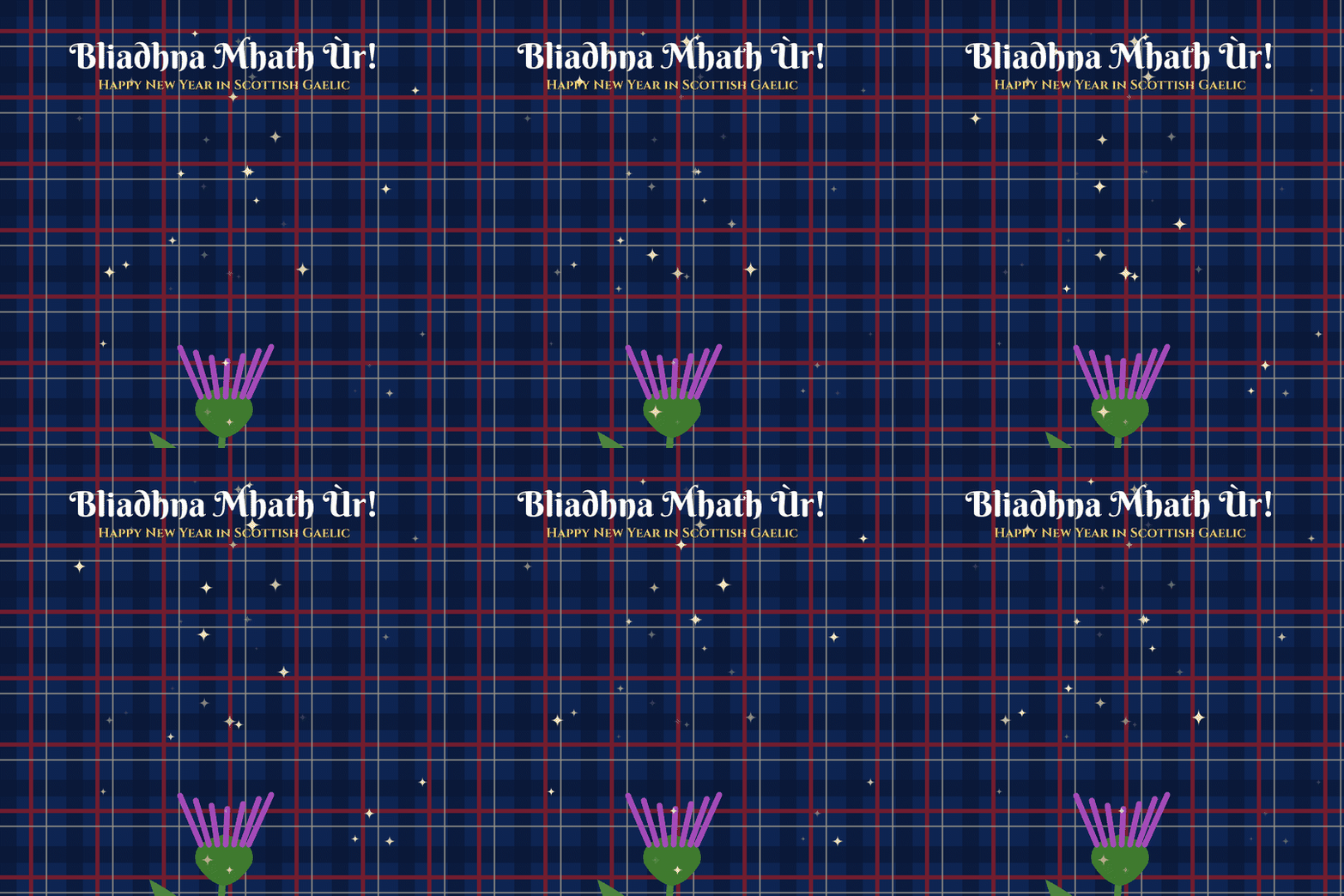
- Hogmanay cards, GIFs and wallpaper
- How to celebrate Hogmanay at home
- Frequently asked questions
- Sources
What is Hogmanay?
Hogmanay is what Scots call New Year’s Eve, the night of December 31 that marks the arrival of the new year. It is one of the biggest dates on the Scottish calendar, and for much of Scotland’s history it mattered more than Christmas. The word was in common use by 1604, when it first appeared in written records, although many of the customs attached to it are older than the name. Where the word itself comes from is still unclear, and historians have offered several competing explanations without settling the question.
Today the festival is a mix of the very old and the very modern. In small communities you will still find fire ceremonies and house-to-house visiting. In cities you will find torchlit processions, street parties, concerts and large fireworks displays. Both versions share the same spirit: welcome people in, let go of the old year, and wish everyone well.
Hogmanay 2026-27 dates
| Event | Date |
|---|---|
| Hogmanay (New Year’s Eve) | Thursday, December 31, 2026 |
| New Year’s Day | Friday, January 1, 2027 |
| Extended celebrations in some places | Saturday, January 2, 2027 |
| Edinburgh’s Hogmanay torchlight procession (usual start) | December 29 (check the official 2026 program) |
Scottish phrases and what they mean
You do not need a Scottish accent to use these. Say them warmly and slowly and nobody will mind. Where a phrase is Scots, I have given the meaning in plain English.
| Phrase | Language | Meaning |
|---|---|---|
| A guid New Year to ane an’ a’ | Scots | A good New Year to one and all |
| Lang may yer lum reek | Scots | Long may your chimney smoke: may you always have a warm, comfortable home |
| Auld lang syne | Scots | Old times, or “for old time’s sake” |
| Bliadhna Mhath Ùr | Scottish Gaelic | Happy New Year |
| Slàinte mhath | Scottish Gaelic | Good health (a common toast) |
| First-foot | Scots tradition | The first person to cross your threshold after midnight |
Hogmanay traditions explained
First-footing
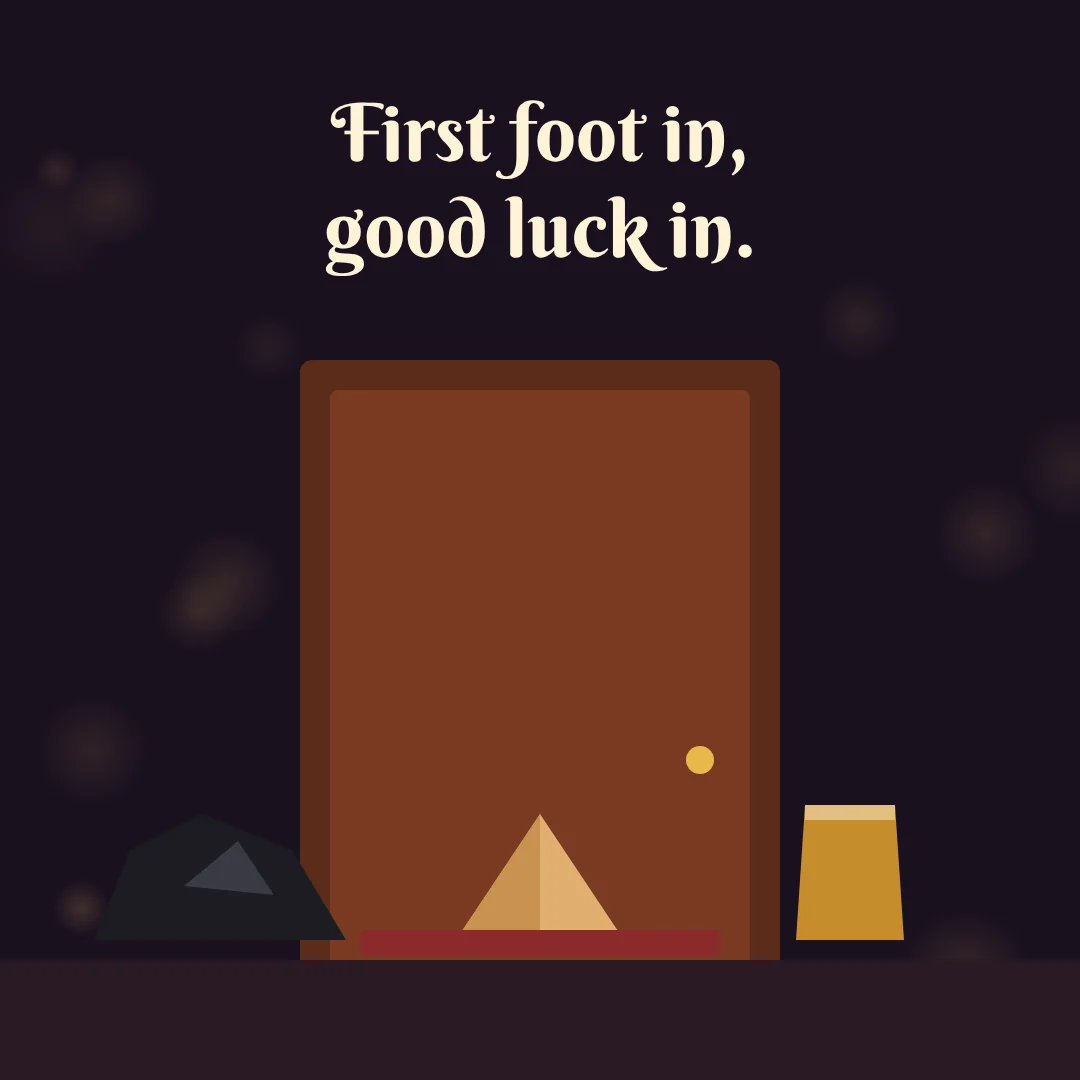
The most widespread Hogmanay custom is first-footing, which starts straight after midnight. The “first foot” is the first person to step over the threshold of a home in the new year, and what they bring (and who they are) is believed to set the luck for the household. Visiting family and friends after midnight to be the first through the door is the heart of it. Traditionally the visitor brings a lump of coal for the fire, and gifts of food and drink such as shortbread and a dram are common too. Luck is said to depend on the visitor, so hosts often hope for a friendly, welcome face.
Singing Auld Lang Syne
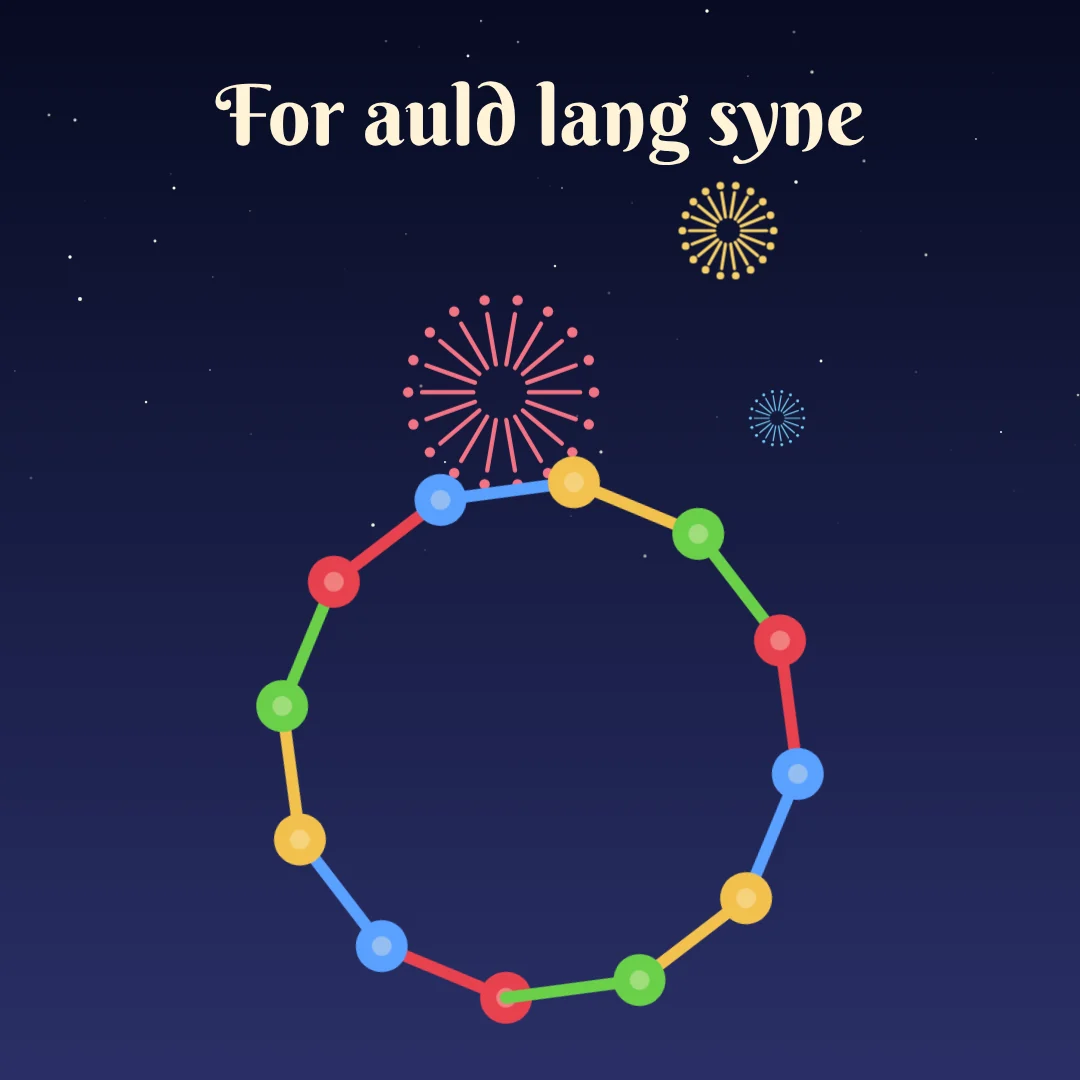
Right after midnight it is traditional to sing “Auld Lang Syne,” a poem by Robert Burns set to a traditional folk tune. The song is usually dated to 1788, but Burns built his version on older material, and a song of the same kind is known to have existed decades earlier. Its title means “old times” or “for old time’s sake,” and despite being sung to welcome a new year, it is really a song about remembering friends and the past.
There is a right way to do the circle. In Scotland the custom is to join hands normally for the first verse and only cross your arms for the last verse, when everyone moves in toward the middle. Many people elsewhere cross their arms from the very start, which is a common mistake. Whichever way you do it, hold on to the people next to you, including strangers.
Fire festivals
Fire plays a big part in Hogmanay. In Stonehaven in Aberdeenshire, people swing balls of fire on long chains through the streets in the Fireball Ceremony, and in Perthshire the Comrie Flambeaux marks the turn of the year with torches. The idea behind the fire is “out with the old and in with the new”: burn away the old year and start fresh. Edinburgh’s city-wide celebration traditionally opens with a torchlight procession on December 29.
Clearing your debts
One old superstition says you should try to clear all your debts before the stroke of midnight so that you start the year owing nothing. Whether or not you believe it, returning a borrowed book, paying someone back or settling a small favor makes a nice Hogmanay habit.
30 original Hogmanay wishes
Every wish below is original. Copy, tweak and send them by text, card or social post.
Classic Hogmanay greetings
- A guid New Year to ane an’ a’. May every door you knock on open with a smile.
- Happy Hogmanay! May the bells ring in a year kinder than the last.
- Wishing you warm hands, a full glass and a house full of friends this Hogmanay.
- Lang may yer lum reek, and may the fire never go out.
- Bliadhna Mhath Ùr! A happy New Year to you and everyone you love.
- May your first foot be a friend and your first song be a happy one.
- Here’s to old friends, new chances and a very good year ahead.
- Slàinte mhath! Good health to you and yours in the year to come.
Wishes for friends
- Thank you for being the kind of friend I’d happily link arms with at midnight. Happy Hogmanay!
- Another year, another reason to say I’m glad you’re in my life. Cheers to us.
- If you’re first-footing me, bring shortbread. If you’re just you, that’s enough. Happy New Year!
- May the new year be as warm as your friendship has been to me.
- To the people who show up in the cold and stay for the song: happy Hogmanay.
Wishes for family
- Happy Hogmanay to the family who make every home feel like a warm one.
- May this new year bring us more shared tables, more stories and more laughter.
- To my parents: thank you for every Hogmanay you made magical. Here’s to many more.
- To the next generation: stay up for the bells, sing loud and never stop asking questions.
- Wherever we are at midnight, we’re together in spirit. Happy New Year, family.
Wishes for couples and loved ones
- My favorite way to start a year is with you, holding hands at midnight.
- Whatever the new year brings, I’d like to face it with you.
- You are my cup o’ kindness. Happy Hogmanay, my love.
- Here’s to another year of old songs, new memories and the same person beside me.
Wishes for colleagues and neighbors
- Thank you for a good year of working together. Wishing you a restful Hogmanay and a bright 2027.
- To our neighbors: may your doors stay open and your kettle stay warm. Happy New Year!
- Wishing the whole team a peaceful break and a strong start in the new year.
- May your inbox be light and your Hogmanay be bright.
Short toasts
- To auld lang syne!
- Slàinte mhath, everyone!
- Here’s tae us. Wha’s like us?
- Out with the old, in with the new. Happy Hogmanay!
Captions and short messages for social media
- Bells, fire and friends. Happy Hogmanay.
- First foot in, good luck in.
- Ending the year the Scottish way: singing loudly with people I love.
- Hogmanay glow. See you in 2027.
- Lang may yer lum reek.
- A cup o’ kindness for the new year.
Hogmanay GIFs, cards and wallpaper
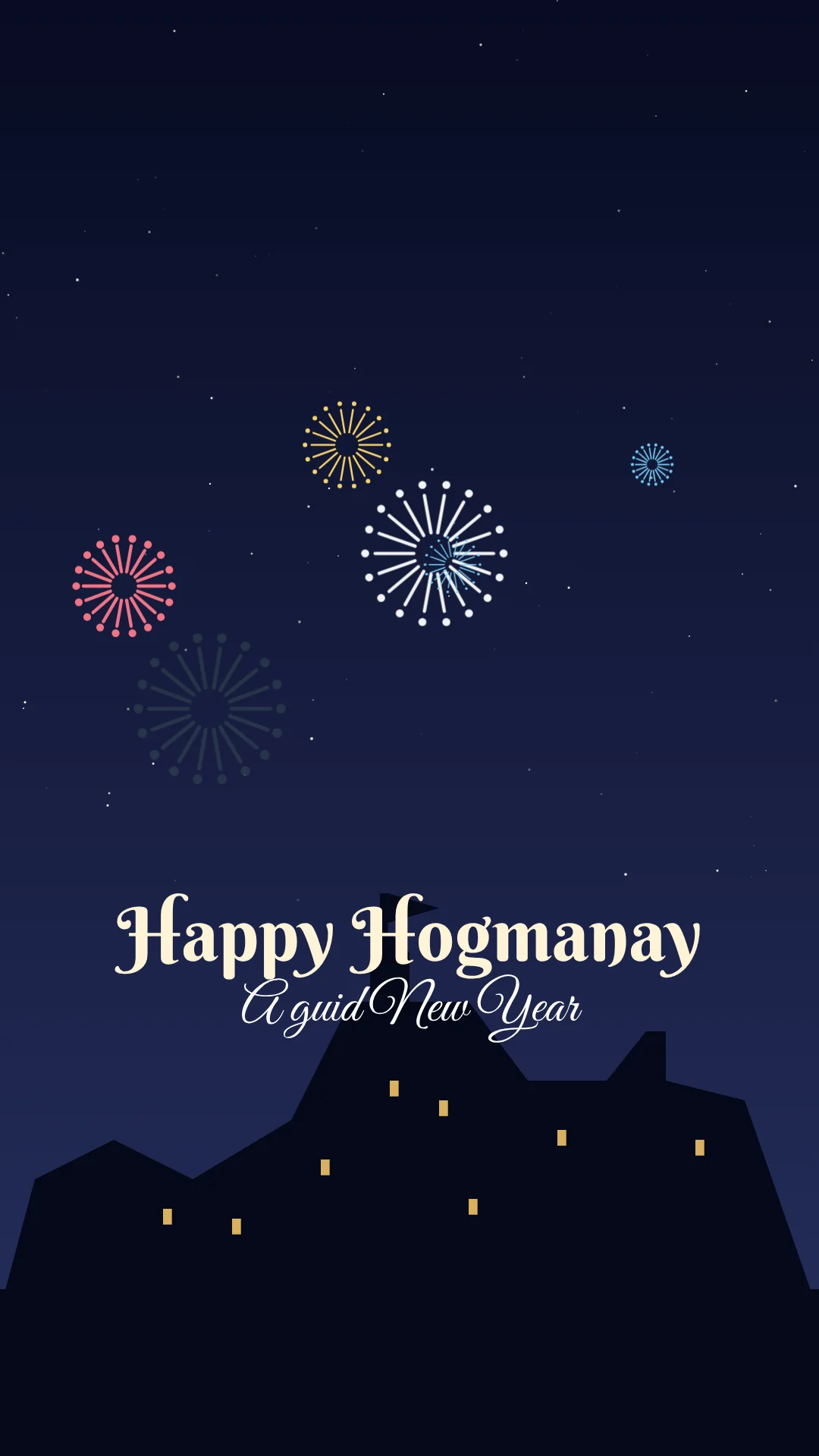
Save any of these and send them with your own wish. The GIFs loop smoothly, so they work well in group chats and stories.
Phone wallpaper
How to celebrate Hogmanay at home
- Settle your debts. Return what you borrowed and say thank you to someone you owe a favor.
- Plan a first foot. Pick a friend or neighbor to visit just after midnight with something small: shortbread, a lump of coal for the fire (a tea light is a safer modern stand-in) or a warm drink.
- Sing Auld Lang Syne properly. Join hands for the first verse and cross arms for the last. Print the words so nobody is left humming.
- Raise a cup. A toast of “Slàinte mhath” works with any drink, alcoholic or not.
- Share a table. Hogmanay is about hospitality. Make enough food that someone can drop in.
- Watch a live event. Edinburgh and other towns stream their fireworks and ceremonies, so you can join in from anywhere.
- Write a note to someone far away. Auld Lang Syne is about old friends. Use one of the wishes above to reach out to someone you miss.
Looking for more ways to say goodbye to 2026? Browse our New Year wishes and messages, New Year wishes for friends, New Year quotes, the best New Year’s Eve images and wishes and our collection of New Year GIFs. If you are still in the holiday spirit, see Kwanzaa wishes, Boxing Day messages and our guide to Epiphany and Three Kings Day.
Frequently asked questions
What is Hogmanay?
Hogmanay is the Scottish name for New Year’s Eve, celebrated on December 31 and often continuing into New Year’s Day.
When is Hogmanay in 2026?
Hogmanay 2026 is on Thursday, December 31. New Year’s Day follows on Friday, January 1, 2027.
What does “A guid New Year to ane an’ a'” mean?
It is a traditional Scots greeting meaning “a good New Year to one and all.”
What is first-footing?
First-footing is the custom of being the first person to enter a home after midnight on New Year. Visitors traditionally bring symbolic gifts such as coal, shortbread or a drink, and the first foot is believed to set the household’s luck for the year.
Who wrote Auld Lang Syne?
The words are credited to the Scottish poet Robert Burns, who set down his version in 1788. He based it on an older song, and it is sung to a traditional folk melody.
How do you say Happy New Year in Scottish Gaelic?
You say “Bliadhna Mhath Ùr.”
A closing thought
Hogmanay asks very little of you: open the door, sing the song, hold someone’s hand. If you do only one thing this December 31, make it a kind message to someone you have not spoken to in a while. That is what “auld lang syne” is for. Happy Hogmanay, and a guid New Year to ane an’ a’.